JPMC Phishing Dashboard
My Role: Sr. Associate UX Designer
Duration: 4 Months
Project Overview
Due to the sensitive nature of this cybersecurity project, only limited details are shared here.
At JPMorgan Chase, employees are periodically tested with simulated phishing emails to promote cybersecurity awareness. However, there was a significant usability gap: phishing test results were not easily accessible. Individual users couldn’t view their own performance, and managers or HR representatives had no streamlined way to review results for their teams or the firm. Data had to be manually requested from specific analysts—creating inefficiencies, silos, and frustration across departments.


User Pain Points
Through stakeholder interviews and user research, I uncovered distinct pain points across three primary user groups:
Employees – Lack of Access and Transparency
Employees couldn’t view their own phishing test history, making it difficult to track performance or defend themselves in HR investigations. They had to rely on others to retrieve their data.
Analysts – Manual and Inefficient Retrieval Process
Analysts were regularly pulled away from core tasks to manually retrieve phishing data for employees and HR, creating inefficiencies and delays.
Analysts and HR – Poor Data Formatting
Phishing results were often stored in raw CSV files with no structured interface, making the data hard to read, share, or analyze efficiently.
My Contribution
I led the design of a scalable, role-based dashboard interface that empowers users at every level to securely access relevant phishing test data. I focused on creating an intuitive, permission-sensitive experience with tailored dashboard views:
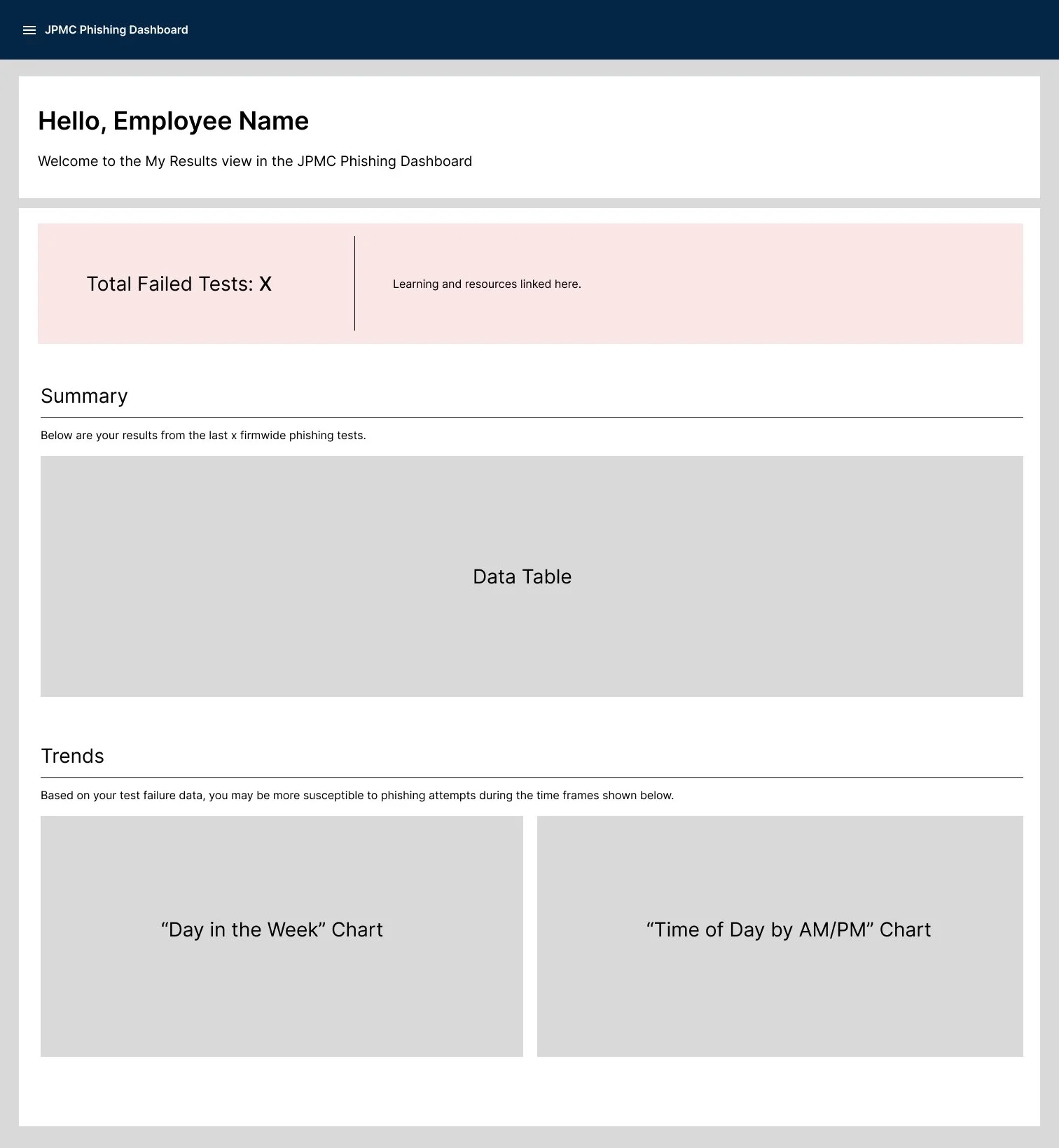
“My Results” dashboard view for individual employees to track their own phishing test history.
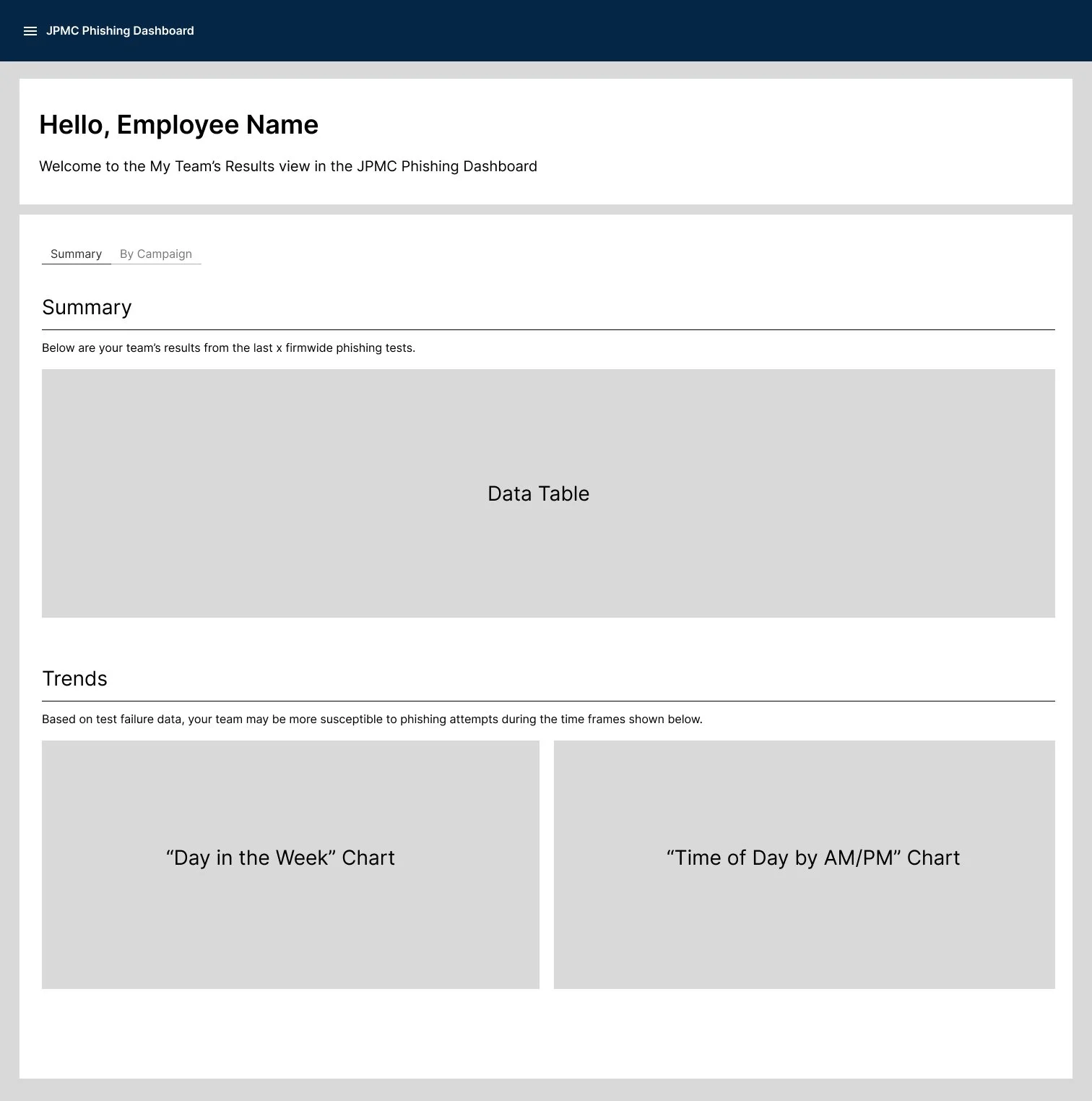
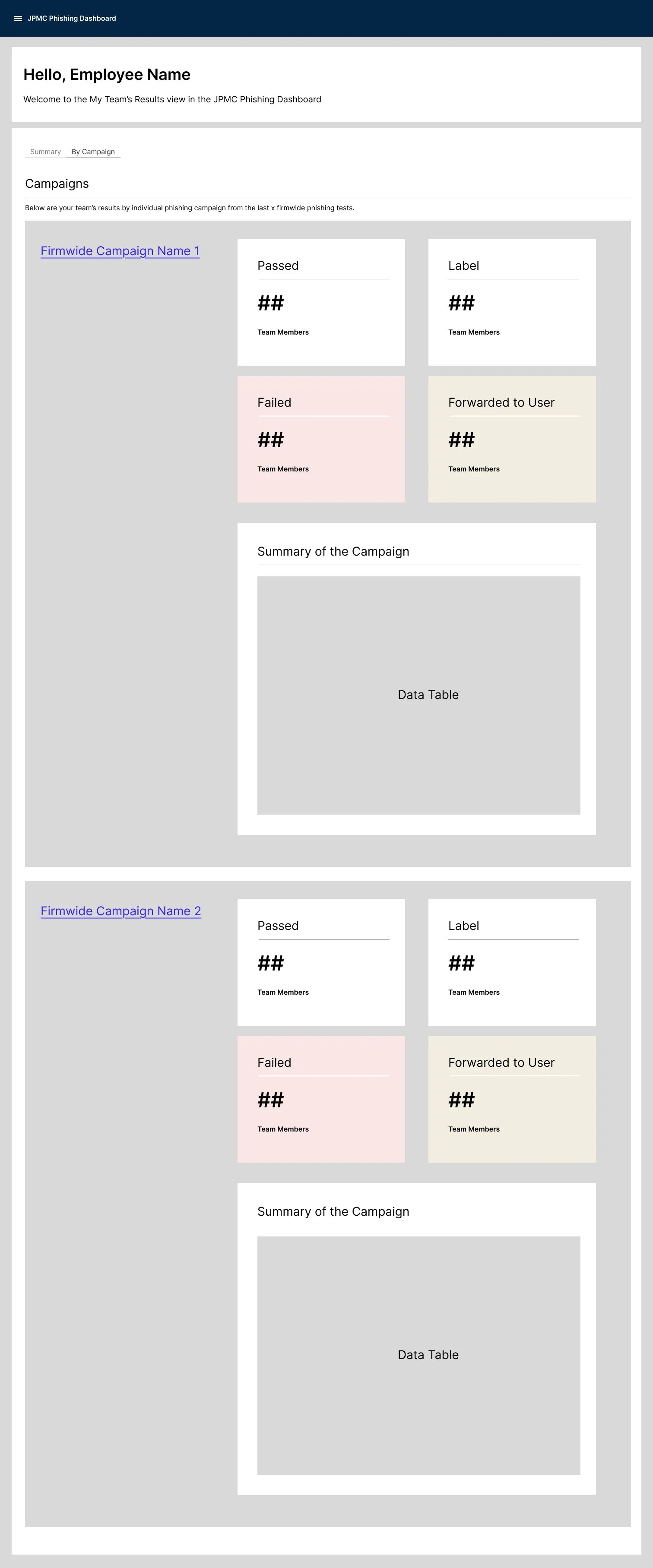
“My Team's Results” dashboard view for managers to monitor the performance of their direct reports.
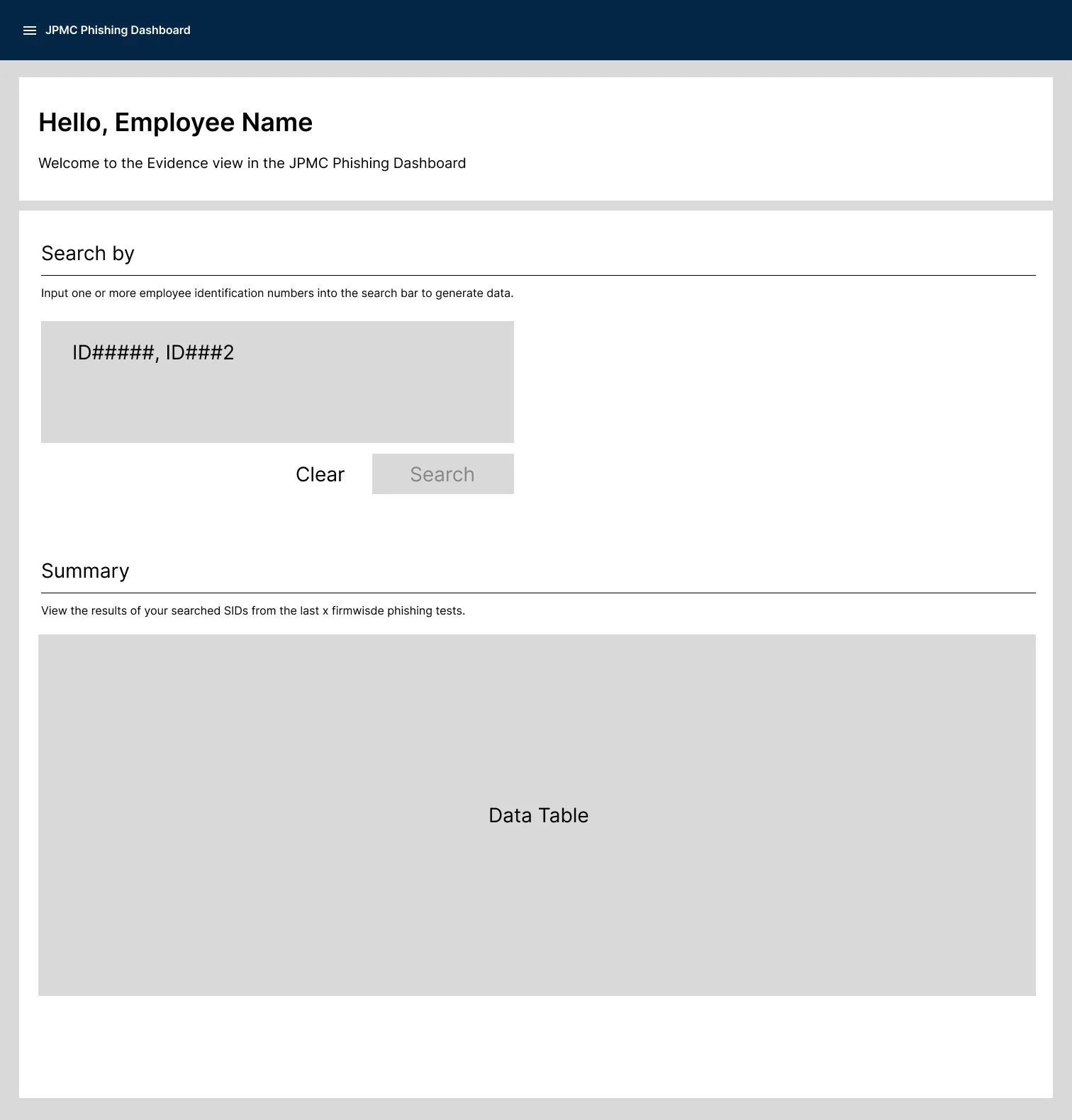
“Evidence View” for designated analysts and HR to analyze data across the organization.
Through user research, wire-framing, and iterative prototyping, I ensured that the solution was both secure and accessible—reducing reliance on manual data requests and promoting a culture of transparency and accountability in cybersecurity awareness.
Impact at Scale
300,000+
JPMC Employees Empowered
700+
Full time employee hours saved anually
Low Fidelity Wire-frames
Due to the sensitive nature of this cybersecurity project, only limited designs can be shared.
My Results View
My Team’s Results View
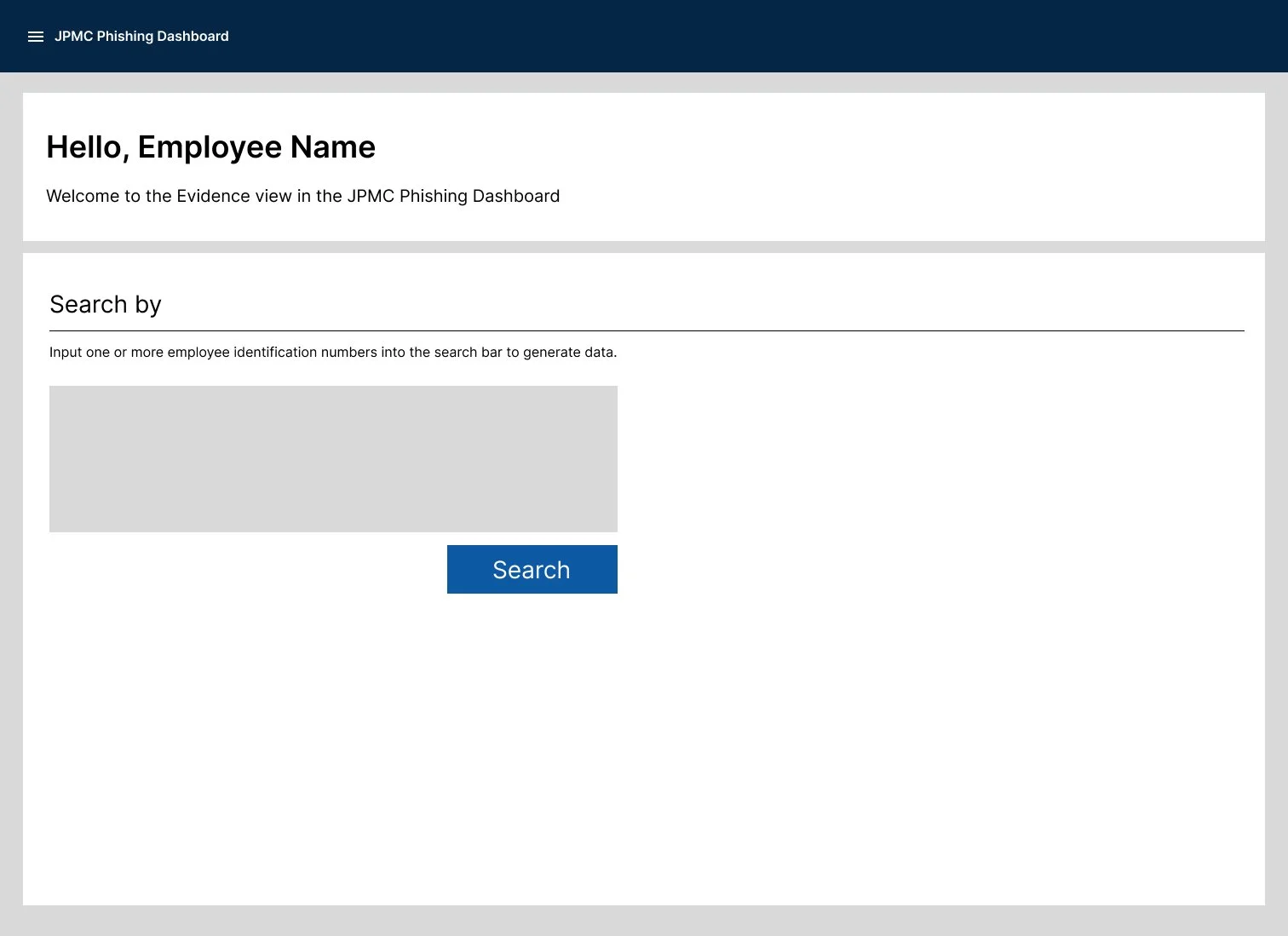
Evidence View